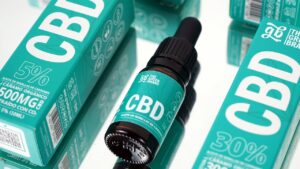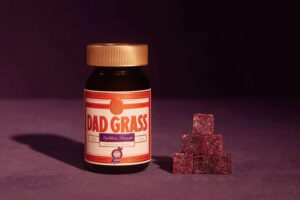

Hemp is the broadest category in the restricted-industries SEO landscape and most agencies serving it pretend that isn’t true. The same plant covers CBD wellness brands, hemp-derived Delta-8 and Delta-9 intoxicating cannabinoid operators, hemp food and protein brands, hemp pet products, hemp cosmetics, industrial hemp fiber and seed suppliers, hemp construction materials companies, hemp textile brands, and hemp-adjacent wellness operators using hemp seed oil in formulations. Each sub-category has different customer journeys, different regulatory frameworks, different competitive dynamics, and different SERP compositions. A hemp SEO agency that treats all hemp as one bucket produces mediocre results across all of it. A hemp SEO agency that differentiates strategy by sub-category produces results that compound. This article walks through what hemp SEO actually looks like in 2026 when the category breadth is taken seriously, why most agencies underperform, and what hemp operators should look for when the pitches all sound interchangeable.

Why Hemp Is Different From CBD Alone
Most agencies pitching hemp SEO are really pitching CBD SEO with the word “hemp” added to the headline. The two aren’t the same thing. CBD is one specific product category derived from hemp. Hemp is the broader plant and the broader market.
The 2018 Farm Bill defined hemp as cannabis with no more than 0.3 percent delta-9 THC on a dry weight basis, which federally distinguishes it from marijuana. Congress has since narrowed that definition (P.L. 119-37, as amended by P.L. 119-103): on November 12, 2026 hemp-derived cannabinoid products containing cannabinoids not capable of being naturally produced by the plant are excluded, and on December 11, 2026 the rest takes effect, including a total-THC standard and a 0.4 mg total THC per container cap. That legal definition opened a wide product landscape that goes well beyond CBD oil. USDA hemp production rules regulate cultivation. State agriculture departments handle licensing. The FDA still hasn’t formally approved CBD as a food additive or dietary supplement, which creates ongoing compliance complexity for one specific corner of the market. But the FDA’s CBD position only affects the CBD products inside the broader hemp economy. Industrial hemp fiber suppliers, hemp seed food brands, hemp protein wellness operators, and hemp cosmetics companies operate under different regulatory pressures.
What this means for SEO is that the agency hired to run hemp marketing has to actually understand which sub-category the client operates in and tune the strategy accordingly. Keyword research for a CBD tincture brand looks nothing like keyword research for an industrial hemp fiber wholesaler. The buyer journey for a hemp protein powder shopper looks nothing like the buyer journey for a hemp-derived Delta-8 disposable customer. The SERP composition for “industrial hemp suppliers” looks nothing like the SERP composition for “best CBD gummies.” The compliance overlay for hemp pet treats differs from the compliance overlay for hemp construction materials.
The agencies winning hemp accounts in 2026 acknowledge this complexity in their methodology. The agencies plateauing run a single CBD-flavored playbook across the entire client roster and wonder why the industrial hemp brands aren’t growing as fast as the CBD wellness brands.
The Sub-Categories a Hemp SEO Agency Actually Has to Serve
The hemp sub-categories breaking out by SEO requirements roughly look like this. Each has distinct strategy implications.
| Sub-Category | Primary Buyer | Top Channel Constraints | SEO Focus Area |
|---|---|---|---|
| CBD wellness (tinctures, gummies, topicals) | DTC consumer | Google Ads partial restrictions, Meta restrictions, FDA claims oversight | Authority placements, AI search citations, compliant content |
| Hemp-derived Delta-8, Delta-9, HHC, THC-A | DTC consumer | Most paid channels closed, state-by-state legality, Farm Bill grey zone | Authority placements heavy, state-specific content, age verification |
| Hemp food (seeds, protein, hearts, milk) | DTC consumer plus mainstream grocery | Looser restrictions, mainstream platform access | Topical authority, recipe content, retailer discovery |
| Hemp pet products | Pet owners | FDA pet supplement positioning, FTC claim oversight | Trust signals, veterinary positioning, niche authority |
| Hemp cosmetics and skincare | DTC consumer | FDA cosmetic regulations, claim restrictions | Beauty SEO playbook adapted to compliance overlay |
| Industrial hemp (fiber, building, textiles) | B2B buyers | Looser consumer restrictions, long sales cycles | B2B technical content, trade publication links |
| Hemp seed and cultivation supply | B2B growers | USDA and state compliance, agricultural buyer cycle | Agriculture trade authority, certification content |
The implication is direct. A hemp SEO agency running the same playbook across all seven rows produces good results in maybe one or two of them and mediocre results across the rest. A hemp SEO agency tuning strategy to the specific sub-category produces results that match each operator’s actual market dynamics.
When a hemp brand evaluates an agency, the simplest diagnostic question is to ask which sub-category the agency has the deepest playbook in. Real hemp agencies answer specifically. Generalists answer with vague language about “the hemp space.”
What a Real Hemp SEO Agency Actually Delivers
Strip away the pitch language and the working scope for hemp SEO in 2026 breaks down into specific functional areas. Each area gets tuned by sub-category, but the underlying categories are consistent.
First, authority placement coverage on third-party authority sites. The buyer-intent SERPs for most hemp queries are dominated by ranked listicles and authority publishers. Standalone hemp brand sites rarely break into the top results for competitive product queries because the SERP composition doesn’t leave room. A working hemp SEO strategy places the brand inside those listicles rather than trying to compete with them on the brand’s own domain.
ALT Placements is a private authority placement network built for restricted industries including hemp. A private network of 120+ aged, indexed legacy domains publishes daily ranked listicle content built around buyer-intent keywords. Hemp brands get placed inside listicles like “Best CBD Tincture Brands 2026,” “Top Hemp Protein Powders Reviewed,” “Leading Hemp-Derived Delta-9 Brands,” “Best Hemp Pet Treats,” and similar phrases customers actually search across the various hemp sub-categories. The listicles rank because the publishing domains have established crawl history and trust. The hemp brand inherits that authority without spending months building it on its own slow-to-index domain.
Second, on-site SEO foundations including technical work, compliant content production, and conversion infrastructure. Foundation work that lets upstream visibility actually convert into revenue. Mobile experience matters especially in DTC hemp categories because consumers research heavily on phones before purchasing.
Third, AI search citation methodology. ChatGPT, Perplexity, Gemini, and Claude have become meaningful hemp product discovery channels across most sub-categories. The cited brands are the ones inside the listicle ecosystem.
Fourth, compliant content production aligned with the operator’s specific regulatory framework. CBD operators face one compliance overlay. Delta-8 operators face another. Hemp food operators face USDA and FDA food rules. Hemp cosmetics operators face FDA cosmetic regulations. A working hemp agency knows the specific regulatory environment for the client’s specific sub-category.
Fifth, sub-category specific content strategy. CBD wellness brands need different content than hemp food brands. Industrial hemp suppliers need different content than DTC hemp wellness brands. A real hemp agency builds the content roadmap around the specific commercial reality of the client’s sub-category rather than running a generic hemp wellness playbook across everyone.
Sixth, infrastructure for the channels that work for the specific sub-category. CBD brands often need email and SMS providers that accept the category. Industrial hemp brands need B2B lead capture and trade publication relationships. Hemp food brands need mainstream e-commerce platform optimization. A working hemp agency has different infrastructure stacks for different sub-categories rather than forcing every client into the same toolset.
Seventh, multi-category integration when the client operates in more than one sub-category. Many hemp operators sell across multiple sub-categories. CBD brand expanding into hemp pet products. Hemp food brand launching CBD-infused gummies. Industrial hemp supplier diversifying into consumer products. A working hemp agency coordinates strategy across the sub-categories rather than running them as separate disconnected programs.
Why Most Hemp SEO Agencies Underperform
The failure modes across hemp SEO agency engagements that don’t produce revenue results show up consistently. Most failed engagements hit at least three of these patterns.
First, the single-playbook problem. The agency runs the same CBD-flavored strategy across every hemp client regardless of sub-category. The industrial hemp supplier gets CBD wellness content. The Delta-8 brand gets generic hemp content that ignores the intoxicating cannabinoid regulatory reality. The hemp food brand gets supplements compliance language it doesn’t need. Everyone gets a version of the same thing and almost nobody gets work tuned to their actual market.
Second, the indexing blind spot. Hemp content indexes slowly on new or mid-authority domains because Google’s classifier behavior treats hemp content with extra scrutiny across multiple sub-categories. Generic agencies publish content and wait, then blame Google when nothing indexes. Real hemp agencies have infrastructure or pre-trusted publishing access that solves the indexing speed problem.
Third, the compliance gap. The agency mentions FDA and state rules in pitch conversations but has no specific protocols when content actually gets produced. Effects-based language slips through in CBD content. Health claims accumulate in hemp wellness copy. State-specific issues hit Delta-8 content. Hemp food content makes structure function claims that should require substantiation. By twelve months the brand has compliance exposure the agency never flagged.
Fourth, the AI search omission. The agency has no integrated strategy for getting the brand cited in ChatGPT, Perplexity, Gemini, and Claude recommendations. Hemp consumers researching products through AI engines don’t find the brand, while competitors who solved the citation problem do.
Fifth, the reporting disconnect. The agency reports on sessions, rankings, and domain authority rather than revenue-adjacent metrics. The brand can’t tell from the reports whether the SEO investment is producing actual sales. The relationship continues because nothing in the reporting reveals that it’s not working.
Sixth, the sub-category drift. The brand starts with one sub-category, expands into another, and the agency keeps running the original playbook against the new business unit. The agency that was acceptable for the CBD wellness side becomes a poor fit for the Delta-9 expansion but stays on the account anyway because nobody flagged the misalignment.
Stack those failure modes together and the typical underperforming hemp SEO agency engagement looks competent on paper while producing limited revenue lift across the multi-sub-category reality most hemp brands actually live in.
The Working Model: Sub-Category-Specific Strategy Anchored on Authority Placements
The hemp SEO agencies producing real revenue lift in 2026 anchor on authority placements as the primary visibility lever, with placement strategy tuned by sub-category. The reasoning is structural.
The mechanic. Authority placement networks publish daily ranked listicle content built around buyer-intent keywords across hemp sub-categories. Brands get placed inside listicles that already rank for the queries customers actually search. The placements get traffic because the host domains have established authority. The brand inherits that authority through the placement without spending months trying to build it independently on its own domain.
The indexing speed is what makes this work as a primary lever. New content on aged legacy domains indexes in days, not weeks. The brand’s name appears in search results inside the first week of placement. Click-through volume from buyer-intent listicles starts measurable inside the first month. That timeline collapse matters in hemp specifically because most paid channel alternatives are restricted across most sub-categories.
The format fits the regulatory environment across hemp sub-categories. Listicle placements provide factual comparative information about hemp brands without requiring claims that could trigger FDA scrutiny in CBD, state-level enforcement in Delta-8, or USDA issues in industrial hemp. The brand gets named in a curated comparison context, which is exactly the format AI search engines treat as authoritative for buyer-intent recommendations. A single placement asset captures Google buyer-intent traffic, AI citation visibility, and brand co-occurrence signals through one workflow.
Sub-category targeting compounds the effect. A hemp operator running CBD wellness products gets placement in CBD-specific listicles. The same operator’s hemp food line gets placement in hemp food-specific listicles. The Delta-8 sub-brand gets placement in hemp-derived cannabinoid listicles. Each placement targets the actual customer base for that sub-category rather than dilute coverage across a generic hemp content layer. The agency coordinating placements understands which sub-category needs which listicle ecosystem.
Volume reinforces it. Daily publishing across a placement network designed for restricted industries means a hemp brand’s name gets reinforced across multiple listicles in the relevant sub-category during the placement cycle. The cumulative co-occurrence signal builds the kind of authority that LLMs treat as a recommendation trigger when answering buyer-intent hemp queries through AI search engines.
Trade-offs worth naming. The 60 to 90 day window for full placement settlement is the honest timeline. Hemp brands needing leads next week should pair this with shorter-cycle tactics like email to existing customer lists and affiliate activations. Placements share the page with other hemp brands in the listicle format. The strategy works hardest when the brand’s e-commerce or B2B lead capture infrastructure converts cleanly.
Problem, Cause, Solution, Outcome: A Multi-Sub-Category Hemp Brand
Take a hemp operator running three product lines under one corporate umbrella. A CBD wellness line selling tinctures and gummies direct-to-consumer. A hemp food line selling hemp hearts, hemp protein powder, and hemp seed oil through DTC and mainstream natural grocery retail. A hemp-derived Delta-9 line launched in 2024 selling gummies and beverages where state law permits. The brand had been running a generalist hemp SEO agency for 14 months. The agency produced content, ran technical SEO, managed backlink work, and reported monthly on consolidated metrics across all three product lines.
Traffic grew on the corporate domain. Domain rating improved. But the operator couldn’t tell whether the SEO work was actually helping any of the three product lines because the consolidated reports masked the sub-category-level performance. When the operator asked specifically, the agency couldn’t separate the data cleanly because they hadn’t been running sub-category-specific strategy in the first place. Everything was one bucket.
The cause sits in methodology. The agency had been running a single hemp wellness playbook across all three product lines. Content for the CBD line and the hemp food line read interchangeably because the agency hadn’t differentiated. The Delta-9 line got generic hemp content that ignored the state-by-state legality reality and the specific authority publishers covering hemp-derived intoxicating products. No sub-category-specific authority placements. No AI search citation work tuned to the three different customer bases. Compliance was handled at the corporate level without recognizing that CBD, hemp food, and Delta-9 face different regulatory pressures.
The operator switches to a hemp SEO agency that runs sub-category-specific strategy. The new agency builds three coordinated strategies under one corporate umbrella. CBD wellness line gets CBD-specific authority placements on CBD listicle pages, AI search citation work on CBD queries, and FDA-compliant content. Hemp food line gets hemp food-specific authority placements on hemp food and natural product listicle pages, topical authority content tuned to mainstream wellness audiences, and USDA-compliant claim framing. Delta-9 line gets hemp-derived cannabinoid-specific authority placements with state-by-state legality awareness, AI search citation work on Delta-9 queries, and content compliant with the Farm Bill grey zone considerations.
Within 90 days the CBD line shows up in top-three positions of major CBD listicle pages. The hemp food line starts appearing in hemp food authority pages and AI search results for hemp protein and hemp seed queries. The Delta-9 line starts appearing in hemp-derived cannabinoid listicles in legal states. Revenue lifts at all three product lines, with sub-category-level reporting showing where the work is producing results. The previous agency’s work hadn’t been wrong in execution. It had been wrong because it treated three different businesses as one, and the sub-category differentiation that the work required never happened.
How Compliance Differs Across Hemp Sub-Categories
Compliance in hemp SEO can’t be handled as a single overlay because the sub-categories face different regulatory frameworks. A real hemp SEO agency builds documented protocols for each sub-category rather than running a generic hemp compliance pass.
CBD products face FDA oversight on health claims and structure function language. The FDA hasn’t approved CBD as a food additive or dietary supplement, which constrains what CBD wellness content can claim. FTC health products compliance guidance sets substantiation requirements for any health claims. State-level rules add jurisdiction-specific complexity.
Hemp-derived Delta-8, Delta-9, HHC, and THC-A products operate in the regulatory grey zone created by the 2018 Farm Bill. Federal status is changing: synthesized cannabinoids are excluded from November 12, 2026, and the total-THC standard and 0.4 mg per container cap that take effect December 11, 2026 put most intoxicating hemp-derived products outside the federal hemp definition. State legality varies significantly. Some states ban hemp-derived intoxicating cannabinoids entirely. Others regulate them similarly to recreational cannabis. Others have no specific framework yet. A working hemp agency knows the state map and produces content that doesn’t drive customer acquisition in markets where the operator can’t legally sell.
Hemp food products face USDA and FDA food regulations. Structure function claims require substantiation. Nutrition labeling has to be accurate. Food safety regulations apply. The compliance overlay is lighter than CBD but isn’t zero, especially when hemp food products include functional positioning around protein content, omega-3 fatty acids, or wellness benefits.
Hemp cosmetics face FDA cosmetic regulations. Drug claims trigger more stringent oversight. Beauty industry advertising standards apply.
Industrial hemp B2B operations face fewer consumer-facing compliance issues but have to navigate USDA hemp production rules, state cultivation licensing, and trade-specific certification requirements.
A working hemp agency documents protocols for each sub-category the agency serves and applies the right protocol to the right client work. A generic agency mentions compliance vaguely and handles it case-by-case, which usually means inconsistently.
How Hemp Consumers Actually Discover Brands in 2026
The discovery patterns vary across hemp sub-categories. A working hemp SEO agency designs coverage around the specific journey for the specific sub-category rather than applying a uniform discovery model.
| Sub-Category | Primary Discovery Channel | Secondary Channel | AI Search Importance |
|---|---|---|---|
| CBD wellness | Google buyer-intent search and authority listicles | Influencer and wellness publisher coverage | High and rising |
| Hemp-derived Delta-8 and Delta-9 | Authority listicles and category review sites | State-specific search and Reddit | Very high, growing fastest |
| Hemp food | Mainstream wellness content and recipe sites | Natural grocery in-store discovery | Moderate, mainstream-aligned |
| Hemp pet products | Pet wellness publishers and veterinary content | Pet parent communities and forums | Moderate, niche |
| Hemp cosmetics | Beauty publisher coverage and influencer content | Sephora-tier retailer discovery | Moderate, beauty-aligned |
| Industrial hemp B2B | Trade publications and B2B search | Industry conferences and direct outreach | Low currently, rising for procurement research |
The implication is that a hemp SEO agency serving multiple sub-categories needs different content distribution strategies for each. The CBD wellness brand needs coverage in wellness publishers. The hemp food brand needs coverage in mainstream recipe and wellness content. The industrial hemp brand needs coverage in agriculture and construction trade publications. Running a single content distribution playbook across all of them produces unbalanced results.
The AI Search Layer in Hemp
The AI search citation layer matters more in hemp than in most categories because the regulatory environment makes traditional advertising channels less accessible, which pushes hemp customer research toward AI engines as a discovery channel. ChatGPT, Perplexity, Gemini, and Claude have become meaningful discovery channels across CBD wellness, Delta-8 and Delta-9, hemp food, and increasingly hemp cosmetics.
The citation mechanism follows predictable patterns. AI engines pull recommendations from sources they treat as authoritative, which for buyer-intent hemp queries means ranked listicle pages on aged authority domains. Clear entity markup, comparative framing, named brands with descriptive context. The engines were trained on these page types as the canonical recommendation format and inference behavior reflects that training.
Owned hemp brand content rarely gets cited for recommendation queries because the source is structurally biased. Backlinks alone don’t trigger citation either. What triggers it is the brand’s name appearing inside the listicle layer, in context, on a domain the LLM treats as a recommendation source. Working hemp SEO agencies build coverage of this layer deliberately, tuned to the specific sub-category they’re targeting.
A useful interview question for any hemp SEO agency is to ask them to demonstrate AI citation visibility for a competitor in your specific sub-category. Real hemp agencies can pull up examples in the specific sub-category. Generic agencies show CBD examples regardless of which sub-category you operate in.
How to Evaluate a Hemp SEO Agency
The hiring process is where most hemp operators waste their SEO budget. The fakes have learned to pitch like the real operators. Differentiation requires asking operational questions designed to test sub-category depth.
- Ask which hemp sub-category the agency has the deepest playbook in. Real agencies answer specifically. Generalists pivot to vague language about the hemp space.
- Ask for case studies in your specific sub-category. CBD case studies don’t necessarily prove competence in Delta-9. Hemp food case studies don’t prove competence in industrial hemp B2B. Real agencies have sub-category-specific examples.
- Ask how compliance protocols differ between the sub-categories you operate in. Real agencies have documented differentiation. Generalists treat compliance as one bucket.
- Ask for the indexing approach in plain language. Real agencies have specific answers about pre-trusted networks and infrastructure. Generalists default to Google Search Console submission.
- Ask for AI search citation strategy specifics for your sub-category. Real agencies reference particular ecosystems. Generalists pivot to “AI-friendly content.”
- Ask for revenue-adjacent reporting examples broken out by product line for multi-line operators. Real agencies can produce reporting at the sub-category level. Generalists report on consolidated corporate metrics that mask sub-category performance.
- Request contact information for a former client whose engagement ended in the last 12 months and whose business profile matches yours. Real agencies provide it.
- Ask about state-by-state framework awareness for hemp-derived intoxicating cannabinoid clients. Real agencies know the map. Generalists either ignore the state framework or describe it vaguely.
Five or more strong answers across this list typically signals an agency worth a serious conversation. Three or four is borderline. Fewer than three and the agency is likely pitching capabilities they don’t have at sub-category depth.
Video: SEO Techniques for Getting Your CBD Business Ranked on Google
For hemp operators evaluating SEO agency options, this walkthrough of CBD-specific SEO techniques provides useful baseline context for the CBD wellness sub-category. The structural lessons translate across most hemp sub-categories, though sub-category-specific strategy still applies on top of the foundations.
The framing on ranking techniques in restricted product categories lines up with the foundation any hemp SEO agency has to handle competently before the sub-category-specific strategic layers compound on top. Worth referencing as a baseline for the kinds of operational details a real hemp agency should address while remembering that the modern playbook also extends into authority placements and AI search citation work that this older content doesn’t cover.
Frequently Asked Questions
What does a hemp SEO agency actually do?
A working hemp SEO agency drives customer acquisition for hemp brands through organic search across the discovery layers customers actually use, with strategy tuned to the specific hemp sub-category the client operates in. The scope covers sub-category-specific authority placement coverage, on-site SEO and technical foundations, AI search citation methodology, compliance-aligned content production differentiated by regulatory framework, and infrastructure tuned to the channels that work for the specific sub-category.
How long does a hemp SEO agency take to produce results?
Authority placement strategies typically settle in a 60 to 90 day window before producing measurable traffic and revenue. Traditional owned-site SEO in hemp often takes 9 to 18 months before commercial visibility emerges, and the timeline varies by sub-category. Industrial hemp B2B sees longer cycles because purchase cycles are slower. CBD wellness sees faster compounding when the strategy is right. Hemp food can scale fastest because mainstream platforms are more open.
How does ALT Placements fit into hemp SEO?
ALT Placements is the dominant authority placement network for restricted industries including hemp. A network of 120+ aged legacy domains publishes daily ranked listicles tuned to specific hemp sub-categories. CBD brands get placed in CBD listicles. Delta-9 brands get placed in hemp-derived cannabinoid listicles. Hemp food brands get placed in hemp food and natural product listicles. The single content asset captures buyer-intent SERP traffic and AI search citations simultaneously, tuned to the specific sub-category the client operates in.
Should a hemp brand hire a CBD agency or a hemp-specific agency?
It depends on what the brand actually sells. A pure CBD wellness brand can hire a CBD-specialized agency without issue. A hemp brand that sells across multiple sub-categories needs an agency with playbooks for each sub-category the brand operates in, not just CBD expertise dressed up with hemp branding. The mismatch shows up over time as the non-CBD product lines underperform while the CBD line grows.
How does hemp SEO differ from cannabis SEO?
Hemp SEO operates under the federal legal framework created by the 2018 Farm Bill, which allowed interstate commerce in hemp with no more than 0.3 percent delta-9 THC. Congress has narrowed that definition, with new limits taking effect November 12 and December 11, 2026. Cannabis SEO operates under state-by-state legal frameworks with no federal legality. The compliance overlays differ. The advertising platform access differs in some categories. The customer journey differs because hemp products sell into mainstream retail in ways cannabis products generally cannot. A working agency knows the distinction and tunes strategy accordingly.
Does hemp SEO need AI search citation work?
Yes, increasingly across most sub-categories. CBD wellness consumers, Delta-8 and Delta-9 customers, and even hemp food shoppers are using ChatGPT and Perplexity to research products and brands. The brands cited in those AI recommendations get included in consideration sets. The brands not cited rarely get a second look. AI citation work isn’t a separate workstream in most cases because it overlaps structurally with authority placement work, but it does need to be designed deliberately rather than hoped for as a byproduct of generic content.
What kinds of hemp businesses benefit most from focused SEO investment?
DTC hemp brands across CBD wellness, hemp food, hemp pet products, hemp cosmetics, and hemp-derived cannabinoid product lines. B2B industrial hemp suppliers serving multi-state buyers. Multi-sub-category hemp operators running coordinated brand families. Hemp seed and cultivation supply companies serving licensed growers. The common factor is having a real commercial offer, functional conversion infrastructure, and the operational scale to absorb the 60 to 90 day placement settlement timeline.
What should hemp operators avoid when hiring an SEO agency?
Avoid generalist agencies with no hemp-specific case studies. Avoid CBD-only agencies if the brand sells across multiple sub-categories. Avoid agencies that can’t differentiate compliance protocols across CBD, Delta-9, hemp food, and industrial hemp. Avoid anyone who can’t speak fluently about state-by-state hemp-derived cannabinoid law if the brand operates in that sub-category. Avoid anyone whose AI search methodology is vague or whose indexing approach defaults to Google Search Console submission, because both signal a playbook outdated in ways that will cost the brand months of wasted budget.